
![EMPAKGLASS_-_510381600_-_Selo_TOP5_2025[1].png](https://static.wixstatic.com/media/3d4fdc_3232bb1b975e47d9b861a1b84575703f~mv2.png/v1/fill/w_175,h_175,al_c,q_85,usm_0.66_1.00_0.01,enc_avif,quality_auto/EMPAKGLASS_-_510381600_-_Selo_TOP5_2025%5B1%5D.png)


All Posts
As the year comes to a close, we would like again to take the opportunity to thank you, for your continued commitment to experiencing the difference with our powerful products and solutions.
Once again, we've learned a lot from your feedback, and from the countless surveys and polls Empakglass has conducted in the last 5 years.
It is the moment to make this year's balance on performance and accomplishments. We can indeed say that thanks to you, 2016 was quite successful for Empakglass.
We introduced our new website with a look that we consider more in line with the Company’s image and with several features which include the Live Chat Support, enabling us to be closer and more effective with you.
This was, as well, the year in which Empakglass consolidated its Open Training Workshops held in Lisbon as a trademark of our interactive training programs, without forgetting Lisbon sightseeing Tours success amongst all our participants!
We hope that you've taken advantage of our detailed training workshops and our reference manuals, either held in Lisbon or across the Globe in our you facilities.
During this year GLASSTEC edition, we had the opportunity to present you our latest Software Packages versions namely:
GlassTor Suite, for Batch, Glass Compositions and Colour Changes;
Empaktor Suite, for Forming Simulation.
At this event we have also introduced the partnership between Empakglass and ParmaControls by presenting several Quality Control & Cold End Equipments:
CanNeed-BPT-400: Ramp Pressure Tester
CanNeed-VLT-100: Vertical Load Tester
CanNeed-GIT-100: Glass Bottle Impact Tester
CanNeed-SFAT-100: Static Friction Angle Tester (Tilt Table)
CanNeed-MBT-200: Thickness Gauge
Closer to the end of this year, we presented to you a new technical service.
We have set up a Laboratory with the goal of evaluating glass defects, perform glass analysis, and backup our internal R&D, namely our mathematical glass models.
Finally, we introduced a new Partnership between Empakglass and Tempsens Instruments.
So, as you can see, we are looking forward to 2017, to be challenged by your projects and to continue to help you finding solutions to your daily issues.
Thank you again for a great year.
Sincerely,
Pedro Pontes, Hélder Remédios, Reinhard Boettger Management Team, Empakglass – Performance Solutions

Empakglass and Tempsens Instruments join up forces with a new partnership for Portugal with the goal of providing to its client’s technical solutions for monitoring and controlling temperatures.

Tempsens is one of the world’s largest solution provider for thermal engineering products including Temperature Sensors, Infrared Pyrometers, Heaters, Cables and Calibration Equipments. The headquarters are based in India and have a manufacturing facility in Germany. Tempsens is an ISO 9001:2008, ISO 14001, OHSAS 18001 certified company with NABL Accredited Laboratories. Tempsens is proud of its technical solutions, quick delivery, high technical standards and outstanding quality which have been appreciated and valued by its customers worldwide. Tempsens exports to more than 70 countries, in all the continents.
With the created synergies between Tempsens and Empakglass, a broader range of Services and Equipments will be available for our Customer base.
Empakglass is pleased to announce that has extended its range of services namely in Glass Defect analysis and Glass Composition determination.
By adding this new service, which allow a comprehensive knowledge in sample analysis and complemented with glass container process specific know-how from Empakglass, we are able to provide even more custom technical solutions to our clients.
In these facilities the following services are provided:
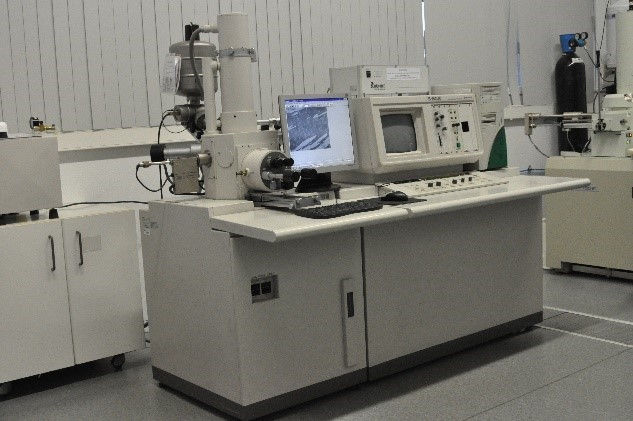
SEM (scanning electron microscope) • Secondary electron imaging; • Backscattered electron imaging; • Standardless elemental analysis including X-ray mapping; • Electron-backscattered diffraction; • Particle counting and sizing; • Image analysis; • Specialized sample preparation;
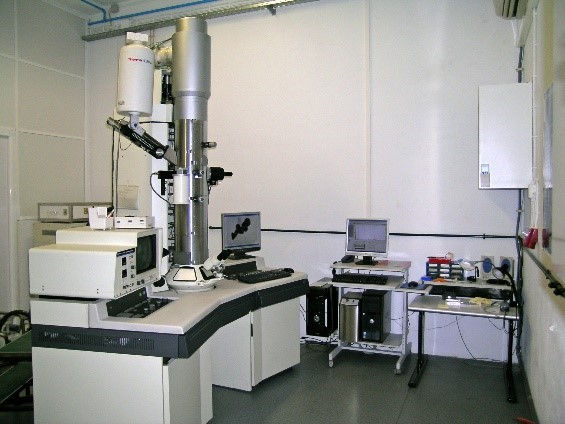
TEM (transmission electron microscope) • Bright-field imaging; • Dark-field imaging; • Phase identification by electron diffraction; • Particle counting and sizing; • Electron tomography; • Elemental analysis; • Specialized sample preparation;
The equipment in these facilities includes:
•Analytical TEM with EDS detector and digital image acquisition; •Analytical FEG-SEM with both EDS detector and EBSD; •Analytical SEM with Bruker light elements EDS detector; •Ion Mill; •Dimpler; •Electroerosion; • Polaron: sputter coater and evaporator (Au/Pd,Cr,C); •Optical microscope;
Our technical expertise allows for the evaluation of glass defects for severity, composition, and root causes, particularly in the analysis and interpretation of stone and cord. Precise and fast glass analyses are a critical factor in resolving batch upset, meeting compositional requirements, assessing composition changes, or meeting customer requirements.
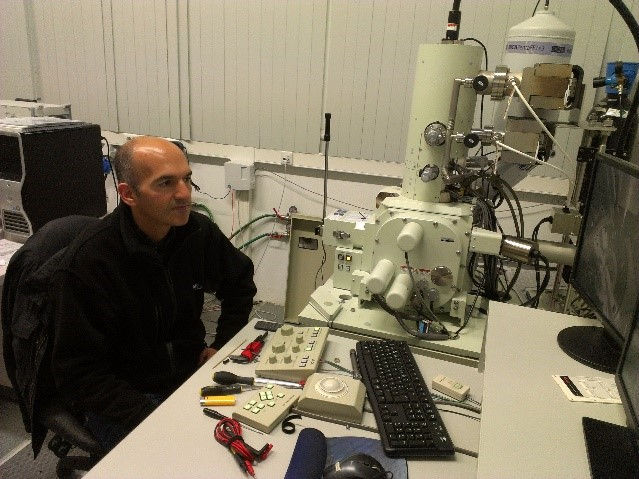
Each report issued by Empakglass will have an analysis with microscopic identification of the solid inclusions in the glass and an estimation of the potential origin of the defects. Our technical staff will discuss your requirements to ensure that all elements of concern are included in the analysis.
The estimated delivery time for a full analysis report is 1-2 weeks after sample reception.
If you are interested to know more about this matter, please contact us through our website at: www.empakglass.com


